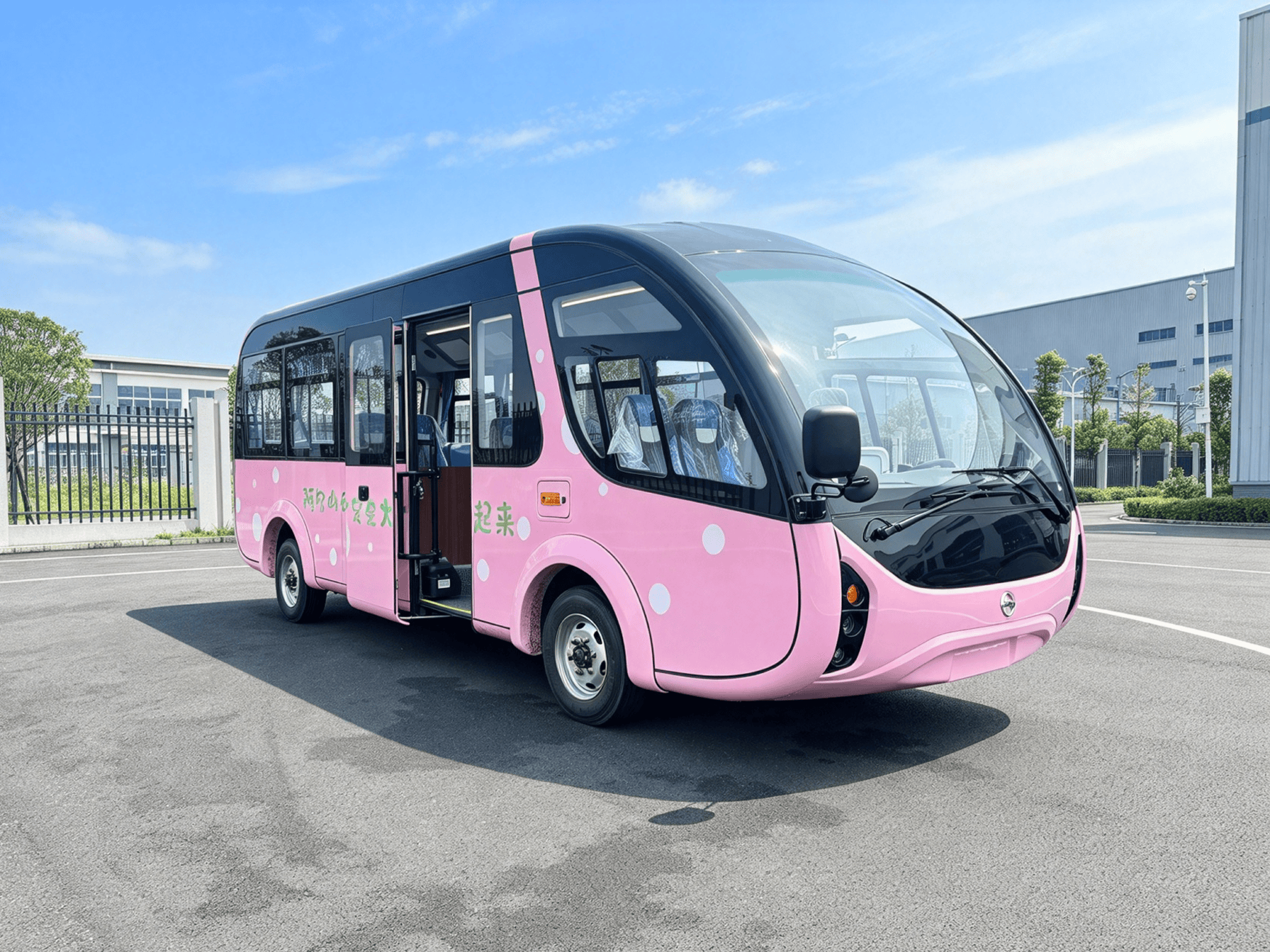
The Suining World Lotus Expo Garden, a premier destination celebrating aquatic flora and cultural heritage, faced a critical operational dilemma: how to facilitate convenient visitor circulation across its expansive, ecologically sensitive wetlands without undermining the very serenity and puritTy it aimed to showcase. Partnering with Daod Intelligent Vehicle Manufacturing Co., Ltd., the Garden implemented a fleet of 14-seat, custom-designed electric sightseeing shuttles, supported by an intelligent management system. This case study details how this tailored solution successfully resolved the tension between accessibility and preservation, resulting in quantifiable gains in environmental performance, visitor satisfaction, and operational economics. The project stands as a replicable model for botanical gardens, wetland parks, and cultural attractions worldwide seeking to align their mobility infrastructure with core sustainability and experiential goals.

1. The Challenge: Navigating the Delicate Balance of a Living Museum
Spanning over 100 hectares of cultivated ponds, natural waterways, and themed pavilions, the Suining World Lotus Expo Garden’s primary appeal lies in its tranquil beauty and educational value. However, its scale and fragile ecosystem presented distinct challenges for internal transportation:
Environmental Integrity at Risk: The use of traditional internal combustion engine shuttles was fundamentally incompatible. Exhaust emissions threatened air and water quality, while engine noise disrupted the habitat of aquatic birds and diminished the contemplative visitor experience essential to appreciating lotus culture.
Inefficient and Intrusive Service: Existing ad-hoc transport options followed fixed, infrequent schedules, leading to long wait times at popular exhibits and under-service in remote areas. The sight and sound of these vehicles were perceived as a visual and auditory intrusion.
Missed Educational Opportunities: Transportation was viewed as a purely utilitarian function, failing to contribute to the Garden’s mission of educating visitors about lotus species, wetland ecology, and regional cultural history.
Operational Cost Uncertainty: Fluctuating fuel prices and the high maintenance demands of conventional vehicles in a humid environment led to unpredictable and escalating operational expenses.
2. The Doda Solution: A Holistic, Purpose-Built Mobility Ecosystem
Doda’s approach transcended mere vehicle supply, offering an integrated system comprising customized hardware, intelligent software, and experiential design.
2.1. Custom-Designed Electric Shuttle Fleet
Zero-Emission Powertrain: Each of the 14-seat shuttles is powered by a high-density lithium iron phosphate (LiFePO4) battery pack, ensuring zero tailpipe emissions and operation at noise levels below 55 dB—quieter than a normal conversation—thus preserving the site’s acoustic environment.
Wetland-Terrain Optimization: The vehicle chassis and electric motor were calibrated for optimal performance on flat but occasionally damp and winding garden pathways. Features include enhanced corrosion protection for the humid environment and regenerative braking for improved energy efficiency.
Aesthetic and Cultural Integration: The shuttle exterior was co-designed with the Garden’s landscape architects. It features a low-silhouette body, a custom livery with lotus-inspired motifs, and a color scheme (e.g., “Lotus White” and “Marsh Green”) that allows the fleet to blend seamlessly into the natural backdrop.
2.2. Intelligent Fleet Management and Operations
Dynamic Demand-Responsive: Daod’s cloud-based AI dispatch platform integrates with the Garden’s ticketing system and strategically placed Bluetooth sensors. The system analyzes real-time visitor distribution, automatically adjusting shuttle deployment frequency and suggesting optimal pick-up/drop-off points to reduce average wait times to under 8 minutes during peak hours.
Predictive Health Monitoring: IoT sensors on each vehicle continuously stream data on battery health, motor temperature, and component wear to a central dashboard. This enables predictive maintenance, scheduling service during off-hours to achieve a target fleet availability rate of 99.5%.
2.3. Transforming Transit into an Immersive Experience
Location-Aware Multimedia Guide: An onboard touchscreen and audio system uses GPS geofencing. As the shuttle passes specific exhibits like the “Ancient Lotus Varieties Garden” or the “Water Conservation Pavilion,” it automatically plays curated audio content in multiple languages, explaining botanical facts, historical anecdotes, and conservation messages.
Seamless Visitor Journey: The shuttle service is fully integrated into the Garden’s mobile app, allowing visitors to see real-time shuttle locations and estimated arrival times, facilitating better itinerary planning.
3. Measurable Outcomes and Value Delivered (Post-Implementation Analysis)
Since the full deployment in Q2 2026, the solution has delivered compelling, data-backed results:
Environmental Impact:
Eliminated an estimated 4.2 tons of CO₂ emissions per month (projected 50+ tons annually) by replacing diesel-equivalent transport.
Reduced noise pollution by over 70% compared to the previous service, as confirmed by on-site acoustic surveys.
Operational and Economic Efficiency:
Reduced energy and maintenance costs by approximately 55% per vehicle-kileter compared to the previous fossil-fuel-based options.
Increased effective passenger throughput by 30% during weekends and holidays through optimized scheduling, without adding vehicles.
Predictive maintenance reduced unplanned breakdowns by 80%, drastically cutting downtime and associated labor costs.
Visitor Experience and Engagement:
Post-visit survey scores for “transportation satisfaction” increased from an average of 68% to 96%.
85% of surveyed visitors reported that the onboard audio guide significantly enhanced their understanding and enjoyment of the Garden.
The shuttles themselves have become a positively noted part of the visitor experience, frequently featured in social media posts about the Garden.